
Allen County Arrest Records
Allen County arrest records begin on the law-enforcement side. The Allen County Sheriff's Office handles sheriff administration and jail operations, and the jail phone is the direct local custody check when someone may have been booked. Kansas VINE is the statewide county-jail custody notification route. A booking or custody record can show that a person was held, but it does not prove the final court charge or conviction.
Court charge records start after law enforcement forwards a case or citation for review. The Allen County Attorney reviews state criminal referrals and prosecutes charges in Allen County District Court. Iola Municipal Court handles municipal complaints and city ordinance or municipal traffic cases. The full criminal case file and final outcome belong in Allen County criminal court records, while the jail custody side belongs with inmate and custody records.
The Allen County Sheriff's Office homepage appears in the manifest because the arrest side starts with sheriff and jail channels.

The sheriff source helps separate custody questions from court charge and disposition questions.
Find Allen County Arrest Records
A practical search uses more than one source because no official Allen County sheriff arrest database or mugshot-style roster was located in the research. For a recent arrest, call the jail or search Kansas VINE for custody status. For filed charges, search Kansas CaseSearch or contact the Clerk of the District Court. For municipal complaints, contact Iola Municipal Court.
- Check custody first through the jail at 620-365-1402 or Kansas VINE if the arrest may be recent.
- Search Kansas CaseSearch by defendant name or case number to see whether district court charges were filed.
- Review the Allen County court calendar for hearing events tied to a criminal, traffic, or juvenile matter when public.
- Contact Iola Municipal Court for city complaints, municipal traffic, bench warrants, dispositions, and city court orders.
- Use the Clerk of the District Court for certified charge dispositions, old files, or records missing from online search.
The Sheriff's Office about page is included because it gives the law-enforcement office context, address, and contact role for Allen County arrest records.

That office may answer custody or records questions, but filed charges still need a court or prosecutor source.
Charges After Arrest
Charges after arrest begin when the prosecutor or city decides what to file. The sheriff's September 18, 2024 press release illustrates the sequence: a teen driver was taken into custody, processed by a juvenile intake officer, transported to a juvenile detention center, and the listed charges were forwarded to the Allen County Attorney's Office for consideration. That language is important. Forwarded allegations are not the same as a final conviction.
| Complaint | Information | Indictment | |
|---|---|---|---|
| Filed by | Officer, city, or prosecutor depending on case type. | Prosecutor in a criminal case. | Grand jury when used. |
| Common use | Municipal complaints, misdemeanors, citation-based matters, or initial allegations. | Many district criminal cases after prosecutor review. | Less common serious criminal charging route. |
| Record effect | Starts or supports a court case or municipal case. | Defines the filed state charge in district court. | Creates formal charges after grand jury action. |
The sheriff press release source is included in the image set because it shows arrest, juvenile intake, detention placement, and charge-forwarding language in one local example.
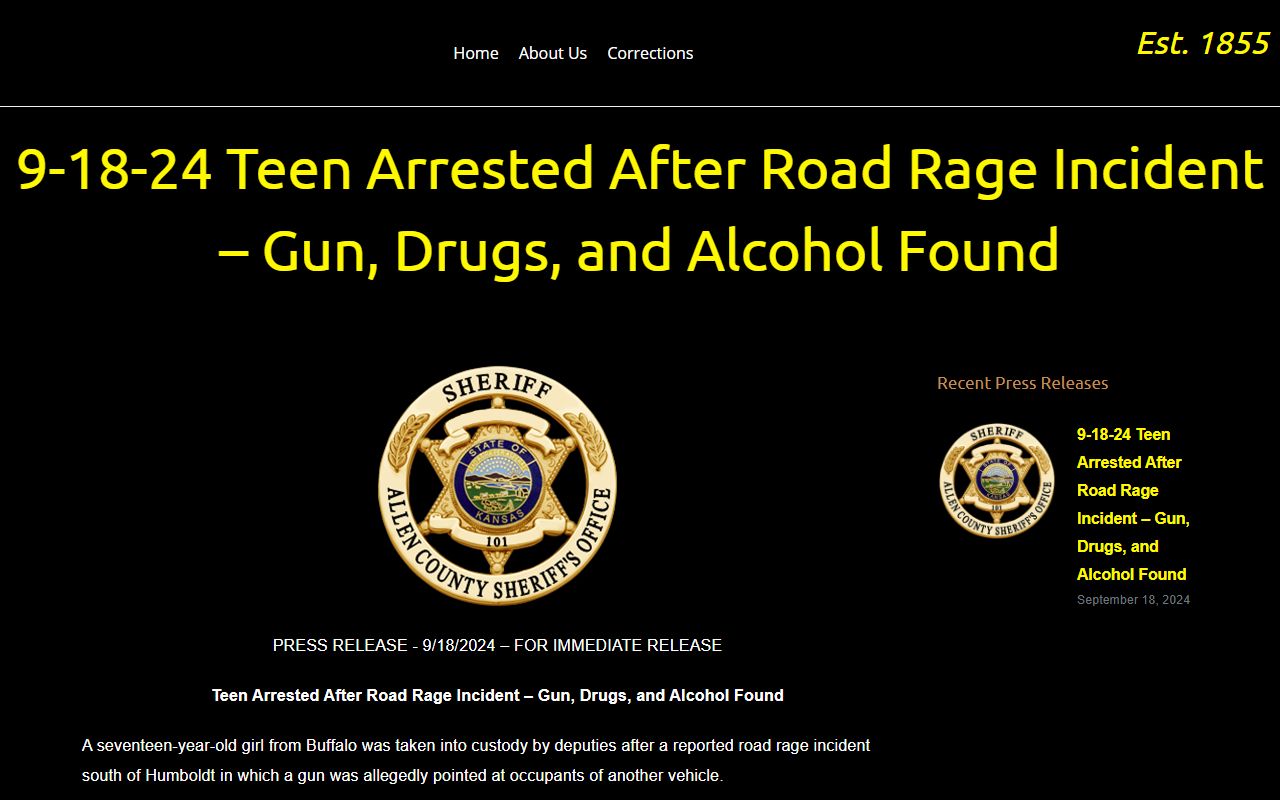
It is a local example of why arrest records, prosecutor review, and court charges must be read as separate steps.
Allen County Charge Status
Charge status can change as a case moves. A filed allegation may be pending at arraignment, amended after review, reduced in a plea, dismissed by the prosecutor, resolved through diversion, or followed by sentencing. The Allen County calendar showed criminal events such as sentencing, re-sentencing, probation violation review, status conference, motion to withdraw plea, competency hearing, and expungement.
| Status | What It Means |
|---|---|
| Pending | The charge has been filed or is active, but no final disposition has been entered. |
| Amended / reduced | The prosecutor or court record reflects a changed charge, level, count, or allegation. |
| Dismissed | The charge was dropped or terminated without a conviction on that count. |
| Diversion | The prosecutor-approved alternative may avoid conviction if the person completes required terms. |
| Convicted / sentenced | A plea or verdict led to sentence terms, probation, fines, costs, or other court orders. |
Charges vs Convictions
A charge is not proof of guilt. It is an allegation filed by the State, city, or prosecutor after arrest, citation, investigation, or review. A conviction is a resolved guilty finding or plea. Allen County court charge records can include charges that were never convictions, charges that were amended, and charges later restricted by expungement.
| Charge | Conviction | |
|---|---|---|
| Meaning | Alleged offense filed in court. | Final guilty result by plea or verdict. |
| Timing | Appears near the start of the court case. | Appears after disposition and sentencing. |
| Record use | Shows what was claimed or prosecuted. | Shows the offense that was legally resolved as guilty. |
Statewide Charge Lookups
Statewide sources answer different questions. The Kansas Bureau of Investigation is the state criminal justice records agency and links to registered offender search. The KBI Registered Offender Website lists people required to register under the Kansas Offender Registration Act. That is not the same as a local arrest record, a current jail booking, or a complete Allen County criminal case file.
The KBI homepage is one of the Allen County charge-record source images because statewide criminal justice records are often confused with local court charges.
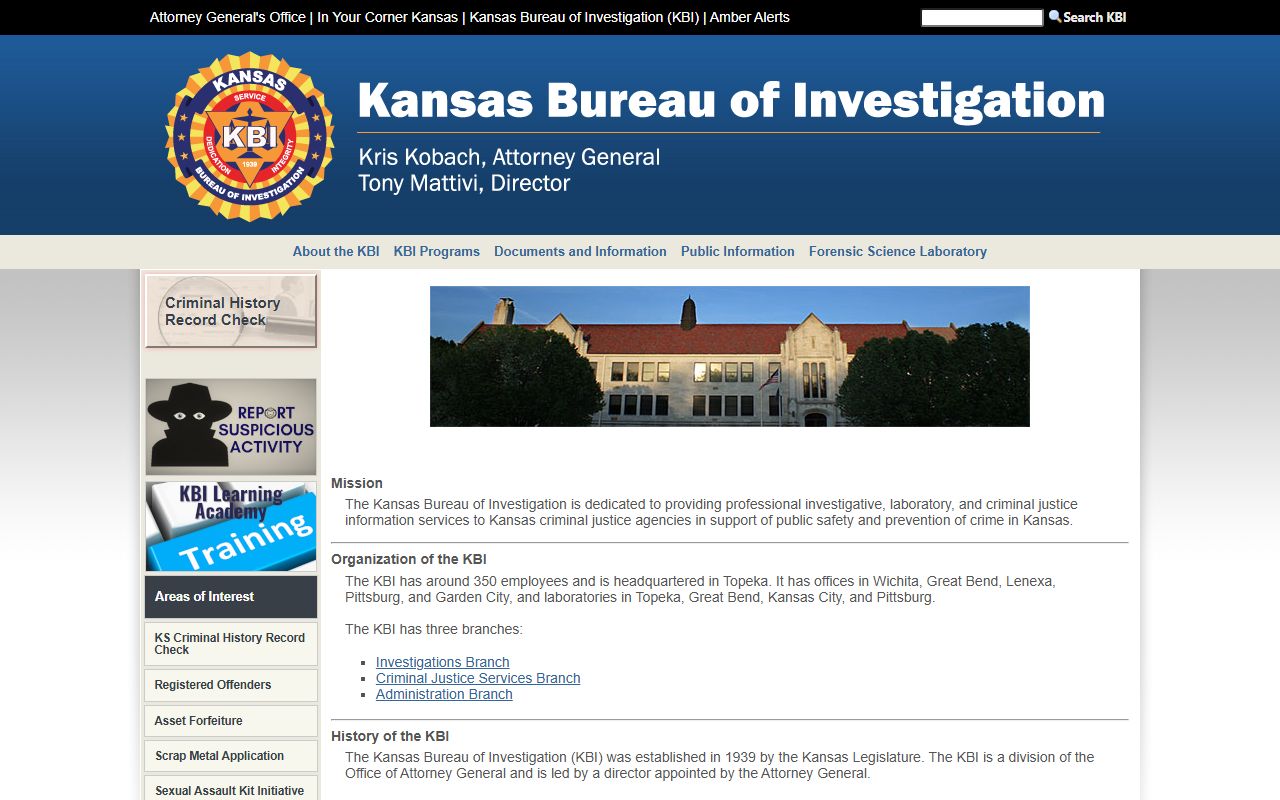
Use KBI sources for statewide criminal justice context, then confirm Allen County charges through the court record.
The KBI registered offender disclaimer is also assigned here because registered offender status is a separate public record category.
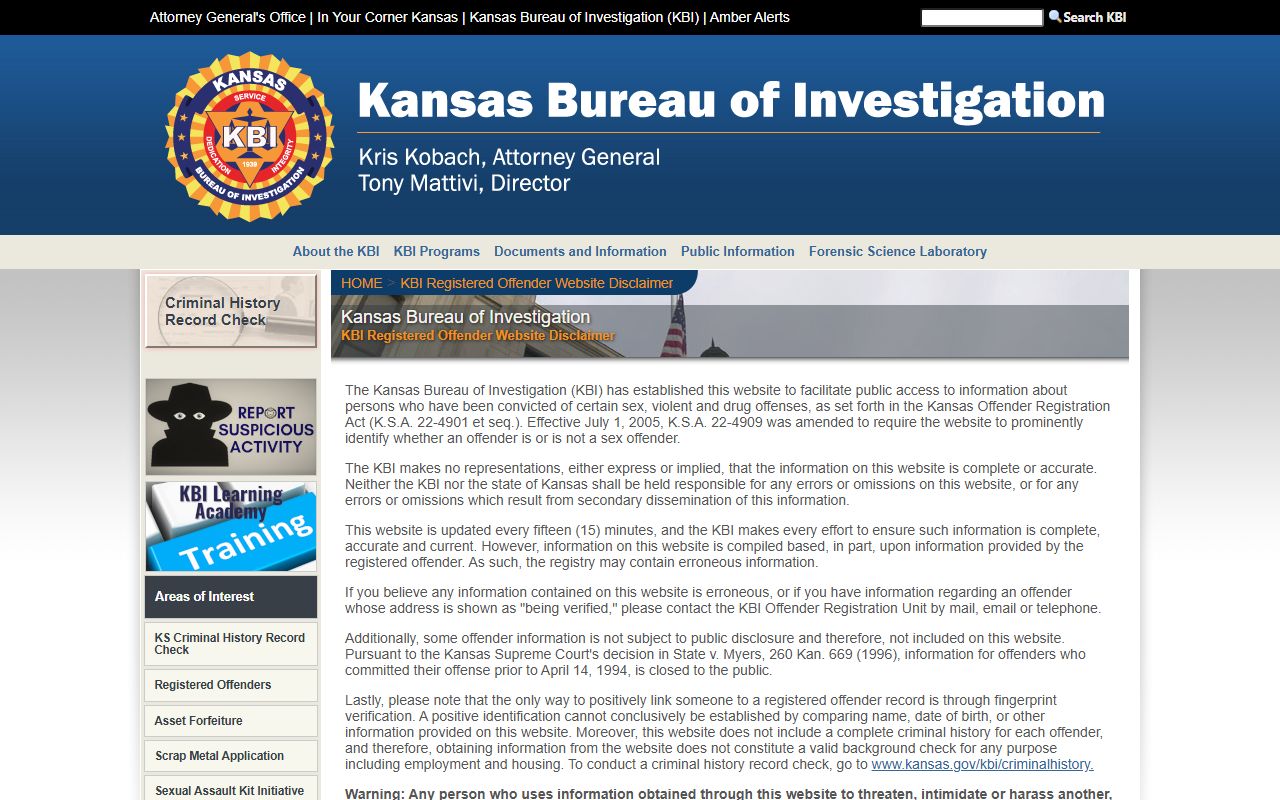
A registered offender search does not show every arrest or charge, and a charge record does not automatically mean registration.
Sealed and Expunged Charges
Some arrest and charge records are restricted. Kansas expungement statutes allow qualifying people to petition to restrict certain convictions, arrest records, diversion agreements, juvenile records, and wrongful-conviction records. Juvenile and child-in-need-of-care information can also be confidential. The Allen County calendar showed sealed entries in juvenile, CINC, and dependent contexts.
| Sealed | Expunged | |
|---|---|---|
| Access | Hidden from normal public view by law or court order. | Restricted after a successful expungement order. |
| Common records | Juvenile, CINC, dependent, protected, or sensitive court data. | Qualifying arrest, conviction, diversion, juvenile, or wrongful-conviction records. |
| Practical effect | Public searches may show little or nothing. | Custodians restrict disclosure as the order requires. |
Note: An Allen County arrest record may be public while a related juvenile or court charge record is restricted.
Allen County Charge Contacts
Use the issuing source. Jail custody questions go to the jail. Sheriff records questions go to the Sheriff's Office. Filed district criminal charges go to Allen County District Court and, when prosecutor review is the question, the Allen County Attorney. City ordinance and municipal traffic complaints go to Iola Municipal Court. This avoids the common mistake of treating one arrest as one finished criminal record. The Allen County Attorney office is on the lower level of the courthouse.
Allen County Attorney
1 N Washington
Iola, KS 66749
620-365-1420
Lower level of the courthouse
Allen County Sheriff's Office
1 N. Washington
Iola, KS 66749
620-365-1400
Jail: 620-365-1402
Allen County Charge Followup
Allen County users should keep the arrest agency, prosecutor, and court file separate when checking whether a charge changed or was expunged. A court order may restrict public access to the district court case, but criminal justice agencies may still retain records for authorized purposes. Ask the Clerk of the District Court and the agency holding the record how any order is applied.