
Allen County Marriage Records
Marriage records and divorce records split between Allen County District Court and the Kansas Office of Vital Statistics. KDHE states completed marriage licenses are first filed with the Clerk of the District Court in the county where the license was issued, then forwarded to Vital Statistics. Marriage information is open at the county district court level, while certified state certificates require eligibility and ID.
The source view at this official or linked record source shows the record channel discussed here.
For Allen County users, the image supports the point that the record path depends on the issuing agency and the type of case being checked.
Apply for Kansas Marriage
Kansas courts use an online marriage license application path. Research notes state Kansas marriage license applications are no longer obtained by going into a district court clerk's office. The marriage license fee found in the research is $85.50.
- Use the Kansas Judicial Branch online marriage license application path.
- Enter both applicants' required identity and relationship information.
- Pay the state marriage license fee.
- After marriage, the completed license is filed through the district court process.
- Order certified certificates from KDHE when a certified state vital record is needed.
| Field | Required | Notes |
|---|---|---|
| Requestor name and signature | Yes | Required for certified certificate requests. |
| Relationship | Yes | Self, family, legal guardian, or other direct interest. |
| Party A and Party B names | Yes | Include prior names when requested. |
| Date and county of marriage | If known | County must identify the Kansas issuing county. |
| ID copy | Yes | Front and back of current legal photo ID. |
Allen County Marriage Fees
Only researched fees are listed. District court decree and certified-copy fees were not located in Allen County sources.
| Item | Amount |
|---|---|
| Kansas marriage license | $85.50 |
| KDHE certified marriage certificate | $20 per copy or 5-year search |
| KDHE certified divorce certificate | $20 per copy or 5-year search |
| VitalChek expedited service | $15 plus certificate fee |
| iKan processing | $5 plus certificate fee |
The source view at this official or linked record source shows the record channel discussed here.
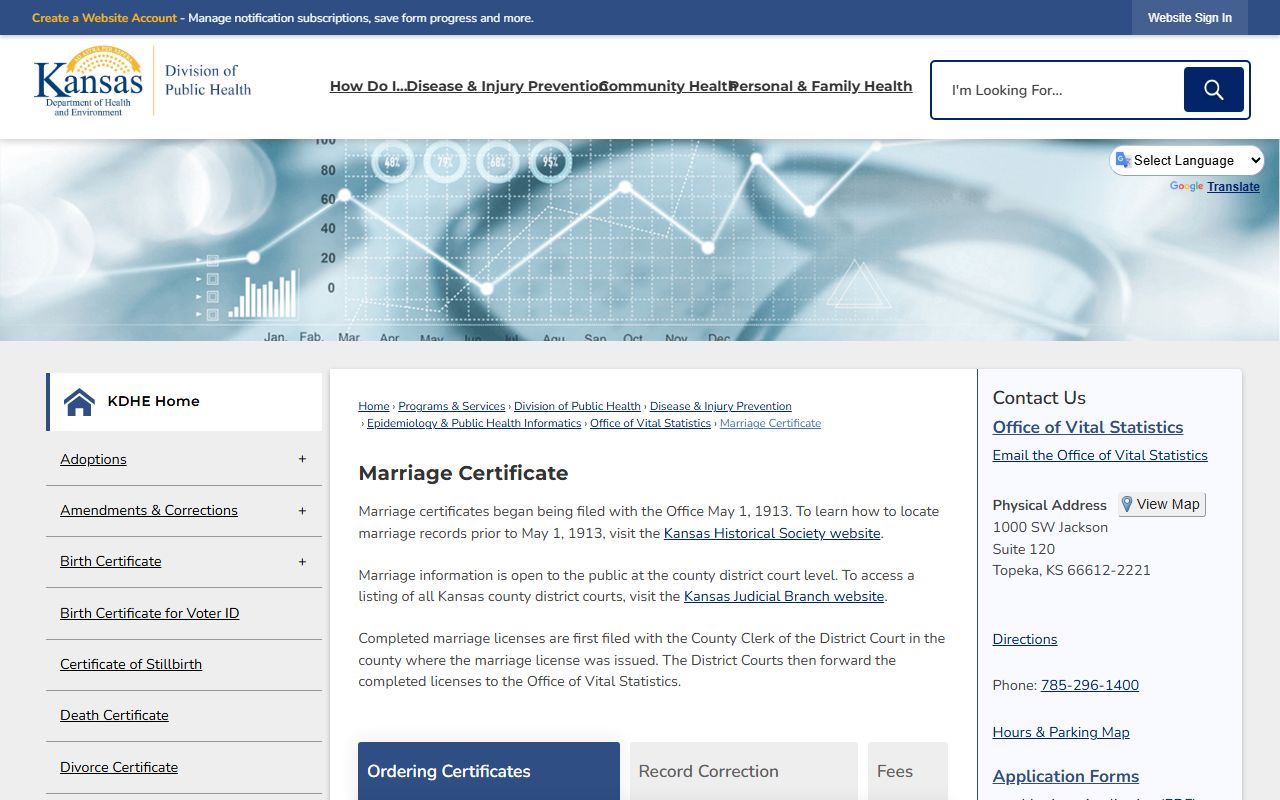
For Allen County users, the image supports the point that the record path depends on the issuing agency and the type of case being checked.
Allen County Divorce Records
Divorce actions are filed in Allen County District Court. KDHE says divorce certificates began July 1, 1951, but the divorce decree is not filed with KDHE. A decree is the court document that details the divorce settlement, and certified copies come from the Clerk of the District Court in the county where the divorce was filed.
Search public divorce case information through Kansas CaseSearch or contact Allen County District Court for courthouse terminal access, older files, certified decrees, or records not visible online. Some domestic records involving children, support, or protected details may be sealed or redacted.
The source view at this official or linked record source shows the record channel discussed here.
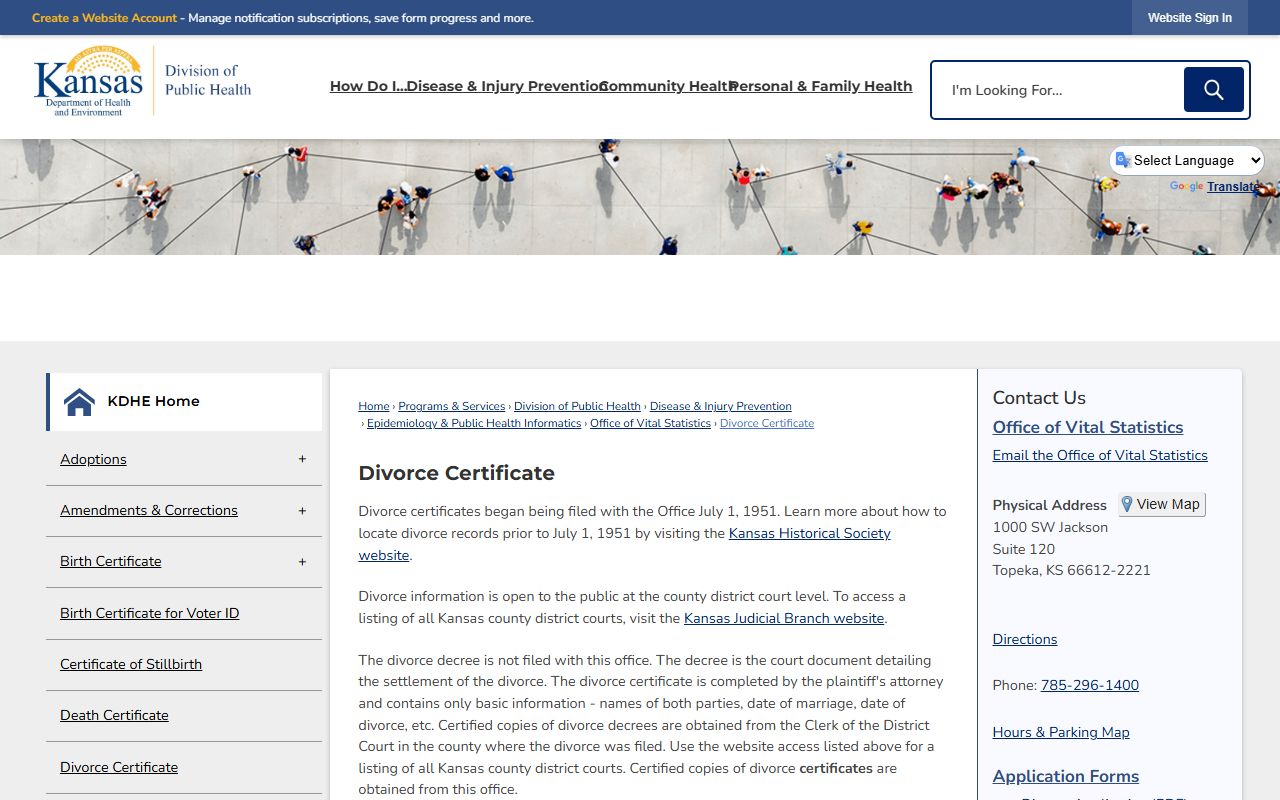
For Allen County users, the image supports the point that the record path depends on the issuing agency and the type of case being checked.
Certified Copy Channels
KDHE offers walk-in service in Topeka, internet ordering, telephone ordering, the iKan app, and mail. Walk-in service is usually 15 to 20 minutes if the record is located. Internet and telephone expedited orders are usually 3 to 5 business days after receipt in the KDHE office. Mail is typically 7 to 10 business days depending on volume.
KDHE Office of Vital Statistics
1000 SW Jackson, Suite 120
Topeka, KS
877-305-8315
Walk-in: 9:00 AM-4:00 PM Monday-Friday
Allen County District Court
1 N. Washington, Room B
Iola, KS 66749
620-365-1425
Divorce decrees and district court files
Vital Record Eligibility
KDHE vital records are not open public records. Certified marriage and divorce certificates are generally limited to the person named, immediate family, a legal representative, or someone who can prove a direct interest needed for personal or property rights. The applications require a current legal photo ID and a specific reason for the request. Mail requests also require a self-addressed stamped envelope.
This differs from district court-level access. KDHE says marriage and divorce information is open at the county district court level, but a certified certificate from the state has stricter eligibility rules. A researcher who only needs basic public case information may start with the district court. A person who needs a certified state certificate for benefits, identity, immigration, school, or insurance may need KDHE instead.
Historical records may require another path. KDHE marriage certificates begin May 1, 1913. KDHE divorce certificates begin July 1, 1951. For older marriage records, KDHE points users to the Kansas Historical Society. Allen County Register of Deeds genealogy guidance also routes marriage, divorce, wills, and probate questions back to the Clerk of the District Court, with local research access handled during office hours.
Decree vs Certificate
The most important divorce distinction is decree versus certificate. A divorce certificate is a vital-record summary with basic information, such as names and divorce date. A divorce decree is the court order that may contain settlement terms, property division, parenting orders, support, and other case-specific rulings. KDHE does not issue divorce decrees. Certified decrees come from the Clerk of the District Court where the divorce was filed.
Allen County domestic cases use DM case numbers in district court. Calendar examples show captions such as marriage matters, petitioners, respondents, final hearings, contempt, motions, and status settings. Some domestic details may be sealed or redacted, especially when children or protected information are involved. Online access is useful, but the Clerk of the District Court remains the copy and certification contact for decrees and case-file documents.
For marriage records, the license, certificate, and court filing are also distinct. The license is the permission and filing route. The completed license is filed through the district court process and forwarded to Vital Statistics. The certified certificate is the state-issued vital record copy ordered through KDHE channels.
Allen County Vital Search Path
Start with the purpose of the request. For genealogy or older local research, the Register of Deeds genealogy page welcomes in-office research but routes marriage, divorce, wills, and probate to the Clerk of the District Court. For a certified state certificate, KDHE is the correct channel. For a divorce decree, Allen County District Court is the source.
The district court route is also better when the record is tied to a case, such as a pending divorce, modification, contempt, custody, support, or final hearing. KDHE certificates do not show the full case history or settlement terms. Kansas CaseSearch and the court calendar may help identify a DM case number before a certified decree is requested from the clerk.
KDHE order channels also vary by speed and cost. Walk-in service in Topeka can be quick when the record is found, while internet and phone orders use an expedited service fee. The iKan app has its own processing fee and copy limit. Mail is often slower but avoids the expedited fee.